Understanding Anger as an emotion
Wrath, fury or rage – whatever the name, we are all too familiar with the feeling. Anger is defined as “an emotional state that can vary in intensity from mild irritation to intense fury and rage,” by psychologist Charles Spielberger. He further states that anger is often accompanied by physiological and biological changes, changes in heart rate, blood pressure, energy hormones, adrenaline, and noradrenaline, and both internal and external events can cause it.
The American Psychological Association describes anger as “an emotion characterised by antagonism toward someone or something that has deliberately done you wrong.” This means that it might not have been the intention of someone to make you angry, but as long as you think there was the intent, you can experience anger.
Anger is also related to the “fight, flight, or freeze” response (of the sympathetic nervous system), making it essential in human survival. This doesn’t merely refer to physical fighting; it can also refer to challenging injustices and standing up for the human rights of minority communities. Anger is a normal, healthy human emotion to experience.
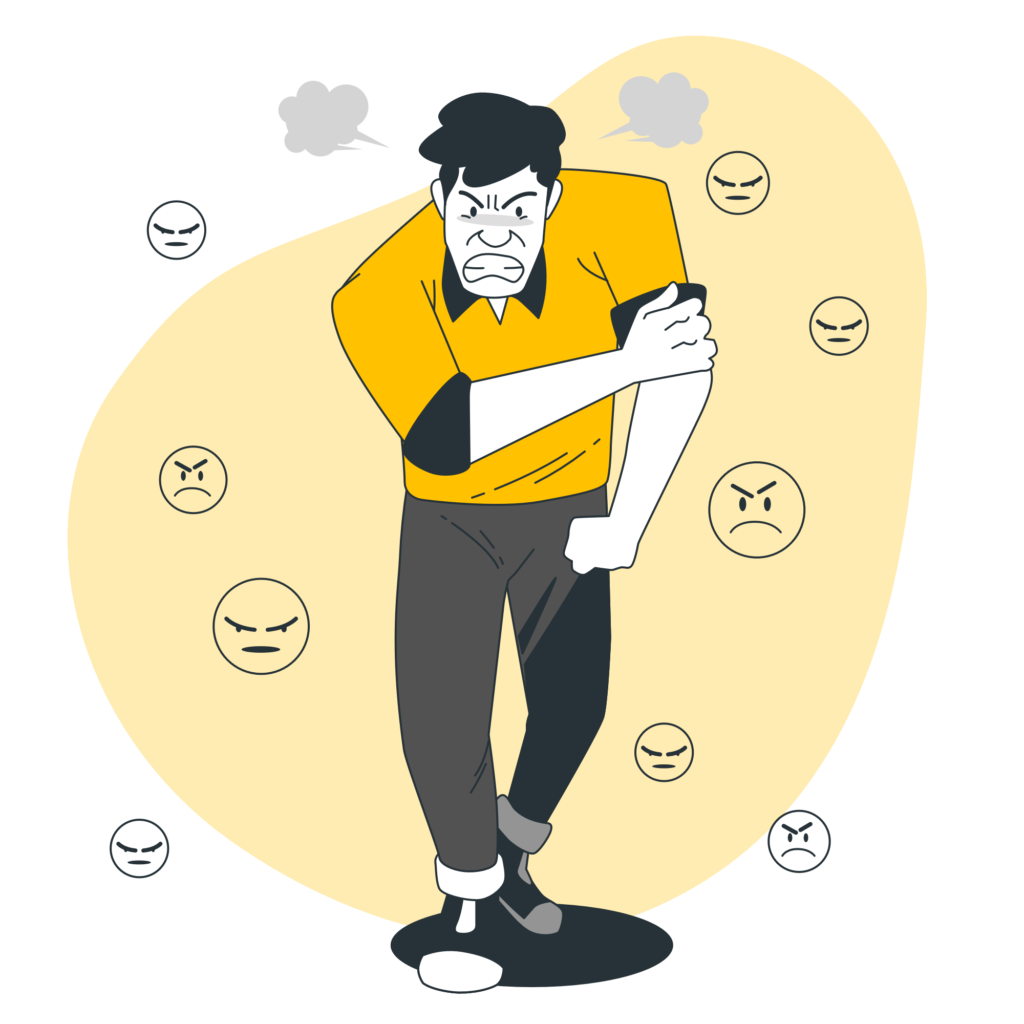
Factors that trigger anger
Anger can take different forms. Some people feel angry much of the time or can’t stop dwelling on an event that made them mad. Others get angry less often, but it comes out as explosive bouts of rage when they do. Whatever shape it takes, uncontrolled anger can negatively affect physical health and emotional well-being.
Several triggers can bring deep-rooted anger to the surface. These trigger events can include anything from traffic incidents to feelings of being misunderstood or unappreciated, lack of acceptance of conditions, or unmet needs.
Psychologist Jerry Deffenbacher maintains that anger originates from a combination of triggering events, the personal qualities of a person, and that person’s evaluation of the situation. Deffenbacher adds that every person is different when it comes to anger. We all experience it to a different extent, with different intensities. Some people might not even show their anger in the loud manner of cursing and fighting we are used to seeing. Some people get physically ill or withdraw themselves from their social environments.
Furthermore, anger can be caused by underlying conditions, particularly alcoholism, narcissism, and depression. It can also be caused by trauma, competitiveness, or a low tolerance for frustration. Even anxiety and exhaustion can cause anger.
Attitudes that make us more inclined to anger
Research proposes that the predisposition to become angry is associated with certain habits and attitudes. These include:
- Entitlement (believing that one’s rights and privileges are superior to those of other people)
- Focusing on things out of personal control (such as a partner’s behaviour)
- External regulation of emotions (trying to regulate emotions by controlling one’s
- environment)
- External locus of control (believing that sources outside of oneself influence your well-being)
- Refusal to see other perspectives (viewing different perspectives as threats)
- Low tolerance for discomfort
- Low tolerance for ambiguity
- Hyperfocus on blame
- A fragile ego
The importance of anger & mood management
Anger management is defined as the process of learning to recognise signs of oncoming anger to manage a crisis. We cannot always control anger, but it is essential to remember that the constant practice of anger management can help in recognising how you feel & how you express your feelings in a crisis.
Moreover, it is vital to control your anger in any relationship, especially when children are involved. Focus on expressing your emotions calmly, and focus on your wants, needs, and feelings without resorting to blaming another party. Remind yourself to calm down, focus on breathing deeply, and leave the situation. You can also try to slowly repeat calming phrases, such as “relax” or “take it easy”, as well as visualise a relaxing experience, either one from memories or ones imagined. You can also try nonstrenuous exercises, like yoga, to relax your muscles.
One effective way of dealing with negative emotions towards another person that is causing you anger, it to accept, forgive, and try to move on. You can also try to open up better communication channels, as misunderstandings often cause anger-inducing conflict. You also have the right to change your environment, from giving yourself personal time to restricting the impact and time some people have on and in your life.
In Conclusion
Anger is not always a destructive emotion to experience. Please don’t allow it to control you or your actions. Instead, let it motivate you to healthily express negative feelings or prompt you to find solutions to your problems. Anger only becomes problematic when your reactions and responses from it influence your relationships (romantic, platonic, or familial), work performance, legal standing, mental health, or overall quality of life.
If you are struggling with the intensity of your anger, please seek help to find ways to manage your feelings. Suppressing any emotions (such as anger, sadness, grief, or frustration) can lead to physical stress on your body.
- Roxane Bayer